Living in the Jordaan: Amsterdam's Most Iconic Neighborhood
The Jordaan at a glance
- Average price: €646,505 per home (€9,336 per square meter)
- Bids above asking price: 68.5% of sales, averaging +9.1% above the asking price
- Time on the market: 60 days on average
- Average home size: 74.9 m², 3.1 rooms, 1.8 bedrooms
Definition: What is the Jordan River?
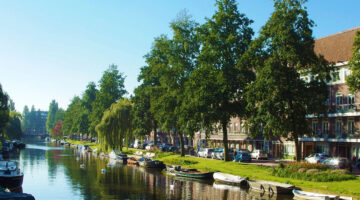
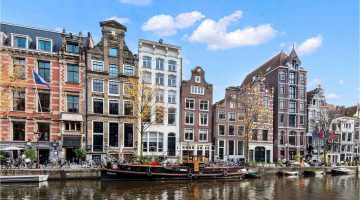
The Jordaan is a 17th-century neighborhood in Amsterdam’s city center, bounded by the Prinsengracht, Brouwersgracht, Lijnbaansgracht, and Leidsegracht. Originally built as a working-class neighborhood, the area has transformed since the 1970s into one of Amsterdam’s most sought-after residential locations. With approximately 13,000 households and a mix of canal-front homes, courtyard houses, and apartments, the Jordaan represents authentic Amsterdam.
Bid-over rates: Competition in the Housing Market
The Jordaan neighborhood has an active sales market. Of all recent transactions , 68.5% involved bidding wars, with an average bid of 9.1% above the asking price. This indicates strong competition, especially for well-maintained properties with distinctive features.
Properties in top condition with recent renovations sell the fastest. Unrenovated properties sell for an average of €1,000 per square meter less, while a complete renovation costs €3,000 per square meter or more. It pays to focus on energy efficiency and the preservation of historic features during renovations.
Key Points: Advantages vs. Limitations
Benefits
- Authentic 17th-century architecture and atmosphere
- Downtown within walking distance (10 minutes to Central Station)
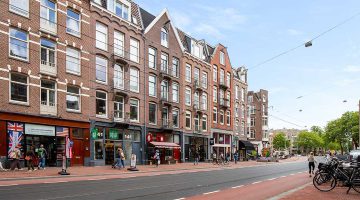
- A vibrant restaurant and retail scene
- A sound investment thanks to stable demand
- Historic courtyards offer a peaceful retreat in the heart of the city
- Excellent public transportation connections (Tram 3, 10, Bus 18/21)
Limitations
- High purchase prices (€8,000–€10,000 per square meter)
- Parking permit: 10-month waiting period
- Homeowners' association fees of up to €400 per month for historic buildings
- Crowds of tourists, especially on weekends
- Limited housing supply (only 23% owner-occupied homes)
- Compact homes (average 74.9 m²)
Step-by-Step Guide: Buying a Home in the Jordaan
Step 1: Arrange your budget and financing
Calculate a realistic budget that includes room for a higher bid (on average +9.1%). Obtain a mortgage quote and set aside funds to cover additional costs.
Step 2: Choose a home type
Choose between canal-front properties (€700,000–€2,800,000), upstairs apartments (starting at €400,000), ground-floor apartments, or courtyard apartments. Specify the minimum square footage and number of bedrooms.
Step 3: Define the location within the Jordaan neighborhood
Northern Jordaan (quieter, more local), the central axis (lively, restaurant and bar district), or the southern border (near Westerpark). Check for noise pollution from the nightlife area.
Step 4: Check technical aspects
Have the foundation, roof, and window frames of historic buildings inspected. Review the homeowners’ association minutes, maintenance reserves, and planned renovations. For leasehold properties: review the ground rent and redemption terms.
Step 5: Conduct a neighborhood survey
Visit at different times of day. Test accessibility by public transportation and bicycle. Check parking availability on the street and the availability of local amenities (supermarket, doctor’s office).
Step 6: Seek professional guidance
A buyer's agent with expertise in the Jordaan neighborhood assists with appraisals, negotiations, and technical inspections. This is especially indispensable in complex homeowners' association situations.
Step 7: Make an offer and negotiate
Act quickly when you find a property that interests you. Be prepared for bidding wars. Have legal due diligence performed before signing the final contract.
From working-class neighborhood to trendy hotspot: the transformation of the Jordaan
The Jordaan emerged in the 17th century as a working-class neighborhood just outside the canal belt. Artisans, merchants, and later factory workers lived here in close quarters in small houses and alleyways. Well into the 20th century, the neighborhood was considered a true Amsterdam working-class neighborhood with a strong sense of community.
That changed in the 1970s. Urban renewal, the influx of artists and young professionals, and a growing appreciation for historic buildings gradually transformed the Jordaan. Whereas homes were once considered outdated, they are now valued for their character. That transformation explains both the neighborhood’s current popularity and its high prices.
Types of housing and residents
The Jordaan offers a wide variety of properties. Canal-front properties with high ceilings and original details are the most sought-after, often ranging from 100 to 200 m². You’ll also find many upper-floor and ground-floor units, divided into apartments starting at 50 m². The characteristic courtyard homes offer tranquility in secluded inner courtyards. New construction is scarce and typically consists of luxury apartments starting at €700,000.
The neighborhood mainly attracts dual-income households and young professionals with higher incomes. Its proximity to downtown, restaurants, and cultural attractions suits an urban lifestyle. First-time homebuyers rarely qualify due to the high prices.
Families with school-age children will find elementary schools here, though they often have waiting lists. The neighborhood has more children than, for example, De Pijp, but fewer than Oud-West. Expats looking for an authentic experience feel right at home here; English-language amenities are plentiful.
Homeowners' Associations and Leasehold: What Should You Look Out For?
When buying an apartment in the Jordaan neighborhood, you will almost always have to deal with a Homeowners’ Association (VvE). VvE fees vary widely, ranging from €100 to €400 per month, depending on the level of maintenance and the building’s reserve fund. For historic buildings, these costs are often higher due to obligations regarding facade maintenance and window frames. In addition, some of the homes are built on leasehold land. Always check the leasehold terms and ground rent costs before making an offer.
Green spaces and outdoor areas
The Jordaan neighborhood itself is quite urban, but Westerpark is just a five-minute bike ride away. This park features playgrounds, restaurants and cafes, and a dog-friendly area. The courtyards serve as hidden green oases right in the heart of the neighborhood. For those looking for more green space, Vondelpark is just a 15-minute walk away.
Accessibility and amenities
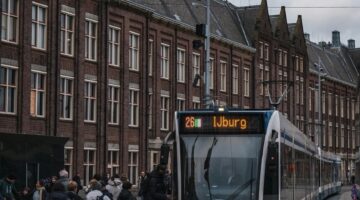
The Jordaan doesn’t have a subway station, but tram lines 3 and 10 and bus lines 18 and 21 connect the neighborhood to Central Station and Zuid. Cycling is still the fastest way to get around. Amsterdam Central Station is a ten-minute walk from Noordermarkt. Westerstraat and Haarlemmerdijk are home to supermarkets, butcher shops, and drugstores.
Home Buying Assistance in the Jordaan
The Jordaan market is competitive. A buyer’s agent with local knowledge can assist with property appraisals, identifying structural defects, and negotiating within the market context. Professional guidance is particularly recommended for historic buildings and complex homeowners’ association situations.
At Amsterdam At Home Makelaars, we’re happy to assist you with a personalized search in the Jordaan neighborhood. Would you like more details about specific properties or an analysis of renovation options? Contact us for personalized advice. The Jordaan remains a dream location, but with the right information, you’ll find exactly what suits you.
Media and tables: Facts and figures
Transaction data for Jordaan (391 homes)
- Average transaction price: €646,505
- Price per square meter: €9,336 on average
- Living area: 74.9 m² on average
- Average number of rooms: 3.1
- Bedrooms: 1.8 on average
- Lowest selling price: €2,000 (exceptional case)
- Highest selling price: €2,800,000
Population composition
- Households: 13,000 in total
- Rental housing: 77%
- Homes for sale: 23%
- Average age: Higher than the Amsterdam average
- Household type: Primarily single-person and two-person households