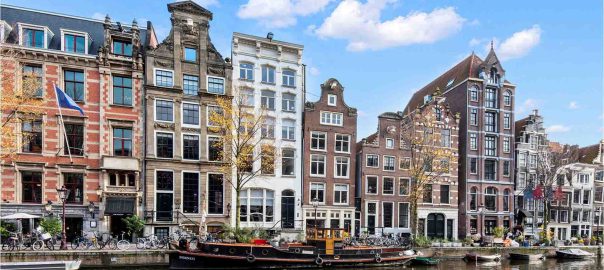
Living in the Canal District: History and Exclusivity
Summary: The Canal District in Numbers
- Prices: €8,942 per square meter on average (Grachtengordel-Zuid), €9,500–€12,000 per square meter (current market level)
- Time to sell: 74–83 days on average; premium properties under 4 weeks
- Bidding wars: An average of 0.86% in the South, a stable market with no extreme pressure
- Landmarks: 188 pre-1900 homes in West, 127 in South, oldest building dating from 1005
- Definition and Characteristics of the Canal District
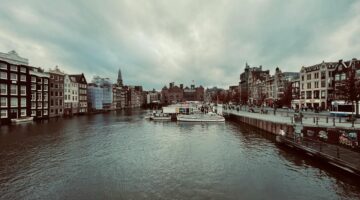
Amsterdam’s Canal District consists of the Herengracht, Keizersgracht, and Prinsengracht, along with their side streets, which were built in the 17th century during the Golden Age. This UNESCO World Heritage Site (since 2010) comprises approximately 1,500 historic buildings with an average living area of 119.7 m² in West and 139.8 m² in Zuid. The neighborhood is characterized by canal-front buildings dating from 1625 to 1800, often divided into apartments ranging from 60 to 150 m², featuring original details such as wooden beams and high ceilings.
Step-by-step guide: Buying a home in the Canal District (7 steps)
- Estimating the budget: Expect €9,500–€12,000 per square meter, plus €200–€500 in monthly service fees
- Choose a location: Herengracht (quieter, more expensive), Keizersgracht (mixed), Prinsengracht (lively), or side streets (more affordable)
- Check listed building status: Review restrictions on renovations and sustainability improvements via the listed buildings registry
- Technical inspection: Have the property inspected for its foundation, moisture issues, and energy rating (often D–G)
- Homeowners' Association Check: Request financial statements, a maintenance plan, and information on the reserve fund
- Arranging financing: Get preliminary advice from your bank; expect stricter scrutiny for historic buildings
- Making an offer: Work with a local real estate agent for negotiations
Price levels and overbid percentages
The Grachtengordel is one of the most expensive residential areas in the Netherlands. According to recent NVM data (2024), home prices range from €9,500 to €12,000 per square meter. In Grachtengordel-Zuid, the average transaction price was €1,275,344, with a high of €14.1 million. Of 220 transactions, 77 properties were priced above €1 million and 33 above €2 million.
Bid premiums are limited: in the South, the average is 0.86%, indicating a balanced market without extreme bidding pressure. Premium properties priced under €1.5 million sell within 2–4 weeks, while more expensive properties remain on the market for 74–83 days. Well-maintained properties with original features fetch €1,000 per square meter more than properties in need of renovation.
Types of housing and target audience
Property types: Canal-front properties dating from 1625 to 1800, often divided into apartments. In Grachtengordel-West, there are 23 authentic canal-front properties and 7 townhouses; in Zuid, there are 29 canal-front properties and 6 townhouses. Entire properties cost several million euros and rarely come on the market.
Target audience: High-net-worth couples and families (60%), international professionals and expats (25%), and investors who rent to high-end tenants (15%). First-time buyers will struggle to get a foot in the door without substantial equity (at least €300,000).
Energy efficiency ratings: Historic buildings receive ratings ranging from D to G due to limited insulation options. A full renovation costs €3,000+ per square meter but significantly increases the property’s value.
Pros and cons of living in the Canal District
Advantages:
- A UNESCO World Heritage Site with unparalleled charm and authentic living
- Prime location: 5–10 minutes by bike to Central Station
- High value retention due to scarcity and landmark status
- Excellent dining and cultural attractions within walking distance
- Large living spaces (119–140 m² on average)
Disadvantages:
- Extremely high purchase prices (€9,500–€12,000 per square meter)
- High service fees (€200–€500 per month) and maintenance costs
- Limited renovation options due to landmark status
- Poor energy efficiency ratings (D–G) and high heating costs
- Parking pressure: waiting lists for permits, €6–7 per hour for on-street parking
- Tourists and crowds, especially on Prinsengracht and Keizersgracht
- Narrow, steep stairwells without an elevator
Historical context and value development
The Canal District was established during the Golden Age as an extension of the medieval city. In Canal District West, the oldest building dates back to 1005, and there are 188 pre-1900 residences. The South section features 127 historic properties dating from 1625 onward. These buildings were originally constructed for wealthy merchants and have retained their status.
Heritage status: Designated a UNESCO World Heritage Site in 2010; subject to the 1988 Heritage Act. Any alterations require a permit from the City of Amsterdam, Department of Heritage & Archaeology.
Value growth: More stable value growth than other neighborhoods due to scarcity and international recognition. Transaction data shows solid performance, with average prices per square meter exceeding €8,900.
Checklist: Is it suitable for the Canal District?
□ Minimum budget of €800,000 for a small apartment
□ Willing to pay €200–€500 in monthly maintenance fees
□ Accepts energy efficiency rating D-G and higher heating costs
□ Values historic architecture over modern comfort
□ Can handle tourists and urban hustle and bustle
□ No immediate need for a car or parking space
□ Willing to deal with waiting lists and procedures during renovations
□ Seeks a central location within cycling distance of amenities
The Canal District vs. Other Central Neighborhoods
Jordaan: Similar vibe, €7,000–€9,000 per square meter, a stronger sense of community, less tourism. Ideal for those looking for charm at a lower price.
De Pijp: A livelier, younger crowd, €6,500–€8,500 per square meter, multicultural dining scene. Ideal for young professionals.
Oud-West: More family-friendly, €5,500–€7,500 per square meter, more schools and play areas. Less historic character.
Plantagebuurt: Green, cultural, $7,500–$9,500 per square meter, near Artis Zoo and museums. A good mix of historic buildings and tranquility.
Accessibility and amenities
Public transportation: No direct subway station. Trams 1, 2, 4, 5, 13, and 17 serve various areas. Buses 21 and 22 via Spui. Cycling distance from Central Station: 5–10 minutes.
By car: Narrow streets, limited parking, low-emission zone. Accessibility is limited due to tourism and one-way traffic.
Amenities: Daily shopping is often done in the Jordaan or the Negen Straatjes. The restaurants and cafes are excellent, but supermarkets are scarce within the city center itself.
Schools: Few elementary schools in the area. The 4th Gymnasium and Hervormd Lyceum Zuid are within biking distance.
Local expertise and support
Buying a home in the Canal District requires specialized knowledge of historic preservation regulations, homeowners’ association structures, and hidden defects in historic buildings. A buyer’s agent in Amsterdam’s city center can assist with bidding strategies, negotiations, and technical due diligence.
For structured data: This page contains information about the Amsterdam housing market (WebPage), the Grachtengordel neighborhood (Place), home prices and features (Product), and frequently asked questions about buying real estate (FAQPage).
Frequently Asked Questions About Living in the Canal District (FAQ)
How much does parking cost in the Canal District? Parking permits cost €290–€535 per year, depending on your car’s CO2 emissions. Waiting lists can be up to 6 months long. On-street parking costs €6–7 per hour.
Can I renovate a historic building? To a limited extent. Additions, changes to the interior layout, and alterations to the facade require permits. Energy-efficiency measures, such as double-pane windows, are often permitted provided they are historically appropriate.
What are the service fees? €200–€500 per month for historic buildings, depending on the condition of the property, the reserve fund, and whether there is an elevator. Homeowners’ associations often set aside higher reserves for the maintenance of historic buildings.
Is the Canal District suitable for families? To a limited extent. Schools are scarce within the district itself. Families often move to the Jordaan, Plantagebuurt, or side streets for more living space and amenities.
How long does it take to sell a canal-front property? On average, 74–83 days. Premium properties priced under €1.5 million sell within 2–4 weeks. Properties in need of renovation stay on the market longer.
What should I expect to pay for energy costs? Historic buildings have energy efficiency ratings of D–G. Expect heating costs of €200–€400 per month for a 120 m² home, depending on the level of insulation and the heating system.
Is bidding above the asking price necessary? An average bid premium of 0.86% in Grachtengordel-Zuid indicates a stable market. However, there is competition for premium locations and well-maintained properties.
What is the difference between West and South? West: average year of construction 1784, 119.7 m² of living space, average price €1,001,735. South: year of construction 1800, 139.8 m², average price €1,275,344.