Living in De Pijp: Amsterdam’s most vibrant neighborhood
Summary:
- Average selling price: €597,000 – €636,000 (depending on the neighborhood)
- Price per square meter: €8,740 – €9,238 per square meter
- Average living area: 66–74 m² with 1.8–2 bedrooms
- Average time to sell: 41–45 days
Living in De Pijp, Amsterdam, is high on the wish list of buyers looking for a lively, centrally located neighborhood with character. This 19th-century working-class neighborhood, situated between the Museum Quarter and the Rivierenbuurt, combines historic architecture with an international, creative atmosphere. But is De Pijp the right fit for your housing needs? And how does this neighborhood compare to the surrounding areas? This De Pijp neighborhood guide will help you make an informed decision.
History: What exactly is De Pijp?
De Pijp is a 19th-century working-class neighborhood in Amsterdam-Zuid, officially designated as the De Pijp district (CBS district code 0363), bounded by Stadhouderskade (north), the Amstel River (east), the Amstel Canal (south), and Boerenwetering (west). The neighborhood consists of three official sub-neighborhoods: Oude Pijp, Nieuwe Pijp, and Zuid Pijp, with a combined population of approximately 14,000 as of January 1, 2025 (source: CBS StatLine).
What makes De Pijp so popular?
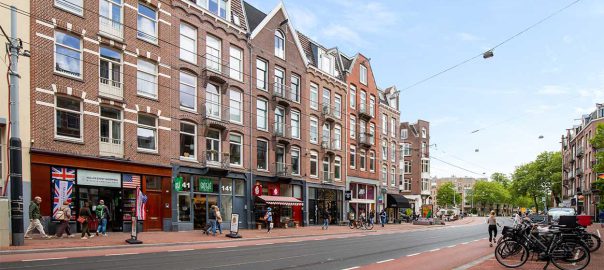
De Pijp owes its name to the narrow, straight streets that resemble pipe stems. The neighborhood emerged in the late 19th century as a working-class district and has retained that rough charm. It’s the mix that makes the difference: the Albert Cuyp Market, hundreds of cafés and restaurants, and a population of students, young professionals, expats, and long-time residents. Sarphati Park serves as the green heart where residents gather.
Orientation: the boundaries of De Pijp
De Pijp is bordered by Stadhouderskade (north), the Amstel River (east), the Amstel Canal (south), and Boerenwetering (west). Albert Cuypstraat runs right through the neighborhood and is its main shopping street. The De Pijp metro station is centrally located, and tram lines 4, 12, and 24 run through the neighborhood.
The 3 sub-neighborhoods of De Pijp: market figures and characteristics
Oude Pijp: the bustling heart
The northern area around the Albert Cuyp Market is the liveliest. Recent market data (2024–2025): 697 transactions, average sales price €636,000, average living area 73.7 m² with 3 rooms and 1.9 bedrooms. Apartments dominate (over 90% of the supply), and energy efficiency class C is standard.
Nieuwe Pijp: quieter and more expensive per square meter
South of Ceintuurbaan lies the Nieuwe Pijp neighborhood. Market figures: 580 transactions, average sale price of €597,000 for 66.6 m² of living space. Notable: highest price per m² (€9,238), shortest time on the market (41 days). Apartments are more compact but sell faster due to their location near Sarphatipark.
Zuid Pijp: the border with Rivierenbuurt
The southernmost section, toward the Amstel Canal, has a mixed character. Figures: 213 transactions, average price €568,000, €8,740 per square meter for 66.7 square meters of living space. An average of 3.3 rooms and 2 bedrooms—more space for the same price.
De Pijp vs. neighboring neighborhoods: which one is right for you?
De Pijp vs. Rivierenbuurt
The Rivierenbuurt neighborhood to the south is quieter, greener, and more family-friendly. You’ll find more single-family homes and spacious apartments there. Prices per square meter are comparable, but on average, you get more square footage for your money. Choose the Rivierenbuurt if you prefer peace and quiet over the hustle and bustle of city life.
De Pijp vs. Oud-Zuid
Oud-Zuid (toward Museumplein) is more expensive and has a different character: more stately architecture, a greater emphasis on status, and fewer street-side restaurants and cafés. Prices are €1,000–2,000 per square meter higher. Choose Oud-Zuid if budget is not a concern and you’re looking for a prestigious atmosphere.
When should you choose De Pijp?
Choose De Pijp if you love the energy of city life, want to live within walking distance of restaurants and cultural attractions, and are willing to settle for a compact living space in exchange for a prime location.
Prices per square meter: How much does a home cost?
Buying a home in De Pijp requires a solid budget. According to current NVM figures (for the period March 2024–March 2025), prices vary by neighborhood:
- Nieuwe Pijp: €9,238 per square meter (highest)
- Oude Pijp: €8,635 per square meter (premium downtown)
- Zuid Pijp: €8,740 per square meter (best value for money)
The condition of the vehicle makes all the difference
Recently renovated apartments with an energy efficiency rating of B or higher fetch an average of €1,000 more per square meter and sell within 30 days. Unrenovated properties (energy efficiency ratings D–G) take 60–80 days to sell.
Sales Dynamics: Speed and Competition
Average time on the market by sub-neighborhood:
- Nieuwe Pijp: 41 days
- Zuid Pijp: 44 days
- Oude Pijp: 45 days
Factors that speed up the sale: • Energy efficiency rating of B or better (-20 days) • Recently renovated (-15 days) • Balcony or terrace (-10 days) • Location near Sarphatipark (-7 days)
Who is De Pijp suitable for?
Ideal for:
- Young professionals (ages 25–40)
- Expats looking for an international atmosphere
- Childless couples or single people
- Buyers with a budget of €550,000 – €700,000
- Who loves the bustling city life
Less suitable for:
- Families with children under 12 (limited green)
- Buyers looking for peace and quiet
- Budget under €500,000 (very limited selection)
- Anyone for whom a garden is a must-have
For expats: international services
De Pijp has a strong expat community (approximately 25% of residents, according to Statistics Netherlands, 2025).
Within 2 km:
- British School of Amsterdam (1.4 km)
- Vincent van Gogh French High School (1.8 km)
- International School of Amsterdam (2.1 km)
Services in English:
- De Pijp Family Practice (multilingual)
- Sarphati Dental Practice (English/Dutch)
- Real estate agencies: 80% are bilingual
Checklist for Buyers in De Pijp
To view the property:
□ Check the leasehold terms (ground rent until 2065 or in perpetuity?)
□ Request information on HOA fees and the reserve fund
□ View the energy rating and long-term maintenance plan (MJOP)
□ Test for noise pollution (especially on weekend evenings/nights)
During the viewing:
□ Check the condition of the insulation (windows, floor, roof)
□ Test the water pressure in the shower and faucets
□ Check cell phone reception (older buildings)
□ Inspect the storage space and bike rack
Before making an offer:
□ Compare sales from the last 3 months
□ Compare appraised value vs. asking price
□ Financial flexibility to bid 10% above the asking price
□ Real estate agent fees + notary fees + transfer tax
Practical tips for buyers
The real estate market in De Pijp is fast-paced and competitive. Make sure to get sound advice from a buyer’s agent who knows Amsterdam. Always check the ground lease terms and factor these costs into your budget. View multiple properties and pay attention to their condition, insulation, and homeowners’ association fees. Set aside some financial flexibility for bidding wars, and consider whether the neighborhood will still suit you in 5–10 years.
Summary: Who is De Pijp the right choice for?
Choose De Pijp as:
- Budget of €550,000 – €700,000 available
- A maximum of 75 m² of living space is sufficient
- A lively environment is more important than peace and quiet
- Walking distance to restaurants and cultural venues is valuable
Consider alternatives such as:
- Family with children (→ Rivierenbuurt)
- Budget over €800,000 (→ Oud-Zuid)
- Priority: Peace and Quiet (→ Amsterdam-Noord)
Conclusion: Is De Pijp the right place for you?
Living in De Pijp means choosing vibrancy, diversity, and urban energy. You give up some space and tranquility, but in return you get culture, convenience, and a central location. The neighborhood is perfect for people who love the hustle and bustle. If you’re looking for a quieter area, check out the Rivierenbuurt. If you want to be right in the thick of things, De Pijp is a top choice.
Frequently Asked Questions About Living in De Pijp (FAQ)
As an expat, can I get a mortgage for De Pijp? Yes, if you have a Dutch employment contract for an indefinite term or for at least two years. ING, ABN AMRO, and Rabobank have special expat desks.
Are there many short-term rentals/Airbnbs? The City of Amsterdam has limited Airbnb stays to 30 days per year since 2022. Homeowners’ associations may have stricter rules. Always check the building regulations.
What’s the parking situation like? Paid parking: €3.60/hour during the day, €1.20/hour in the evening. Resident permit: €535/year (2025). Waiting list: 2–6 months.
Is De Pijp bike-friendly? Absolutely. It’s just a short ride to the city center (5 min), Vondelpark (8 min), and Zuidas (15 min). Note: Avoid the busy Albert Cuypstraat during market hours.
What energy efficiency rating do most homes have? Energy efficiency rating C is standard (70% of the housing stock). Ratings B and A cost €1,000+ more per square meter but save €1,200 per year on gas and electricity.
Are there any plans for new construction in De Pijp? Many buildings are restricted due to their historic status. However, renovations and the densification of courtyards are permitted. Check the zoning plan for your street.