De Baarsjes, Amsterdam: Discover This Popular Neighborhood
De Baarsjes by the Numbers
- Average home price: €592,000 (427 transactions analyzed)
- Price per square meter: €8,555 (average living area of 70.9 square meters)
- Overbid rate: 84.8% of buyers make an overbid (average 10.4%)
- Time to sell: 40 days for well-maintained homes
Living in De Baarsjes means choosing an authentic Amsterdam neighborhood where diversity and vibrancy come together. This neighborhood in the West district is attracting more and more buyers looking for an affordable alternative to the more expensive central neighborhoods, without compromising on urban amenities or accessibility. The neighborhood has undergone a remarkable transformation in recent years: what used to be a working-class neighborhood is now a vibrant residential area with a diverse range of restaurants, specialty shops, and creative hotspots.
Definition & Character of De Baarsjes
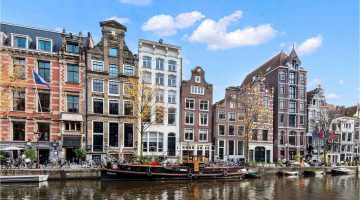
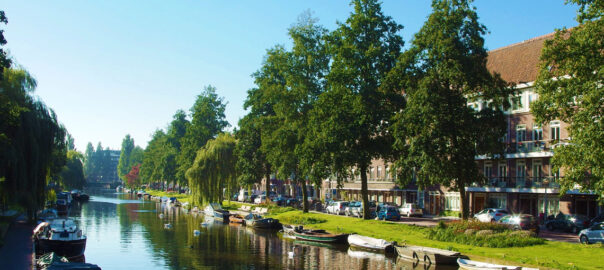
De Baarsjes is a residential neighborhood in Amsterdam-West, bordered by Overtoom, Vondelpark, Bilderdijkstraat, and Kinkerstraat. The neighborhood is characterized by Amsterdam School architecture from the 1920s and 1930s, wide tree-lined avenues, and a multicultural community. The area consists of two parts: the section toward the Kinkerbuurt feels livelier and more urban, while the streets near Vondelpark are quieter and greener.
Bid-to-ask spreads and market dynamics
In De Baarsjes, 84.8% of all transactions involve an overbid, with an average overbid of 10.4%. This percentage demonstrates the neighborhood’s popularity. Of the 427 transactions analyzed, 362 resulted in an overbid. Family homes with gardens typically receive higher bids than fixer-uppers. Homes in good condition sell within 40 days, while properties requiring renovation remain on the market longer.
Bidding factors by property type:
- Turnkey homes: 12–15% above asking price
- Needs minor renovation: 8–10% higher bid
- Major renovation projects: 3–7% overbid
- Homes with gardens: 2–3% higher bidding pressure
Check here: how much you need to bid above the asking price in Amsterdam
Housing Supply and Price Analysis
Price List March 2026
Buying a home in De Baarsjes requires realistic price expectations. Based on recent transaction data, the average price per square meter is €8,555. Homes typically have 70.9 m² of living space, 3.1 rooms, and 2 bedrooms. The price range varies considerably: from €1,202 (unique properties or leasehold) to €1,650,000 for luxury renovated properties.
Price differences by state:
- Fully renovated: €9,000–€9,500 per square meter
- Well-maintained: €8,200–€8,800 per square meter
- Renovation required: €7,500–€8,000 per square meter
- Renovation costs: an average of €3,000 per square meter
The housing stock consists mainly of apartment buildings with porches dating from the 1920s and 1930s, ground-floor apartments with small gardens, upper-floor apartments with balconies or rooftop terraces, and a limited number of single-family homes.
Step-by-Step Guide: Buying a Home in De Baarsjes
- Determine your budget and financing – Expect a 10.4% premium on top of the asking price
- Choose your preferred location – Peace and quiet at Vondelpark vs. the lively atmosphere on Kinkerstraat
- Select property type – Apartment building, ground-floor/upper-floor apartment, or single-family home
- Assess renovation needs – €1,000 per square meter difference in condition
- Schedule viewings – On average, it takes 40 days to sell high-quality properties
- Hire a real estate agent – Local market knowledge helps prevent mistakes
- Make a strategic offer – Based on comparable transactions and property type
Schools and Child Care
Families in De Baarsjes will find several elementary schools offering a variety of educational approaches. De Baarsjes School on Postjesweg, De Kraal Elementary School, and the Jan Vermeer Montessori School cater to a range of educational preferences. For childcare, there are facilities on Jan Evertsenstraat and around Mercatorplein. Waiting lists for popular schools can be as long as 6–12 months.
Accessibility and Mobility
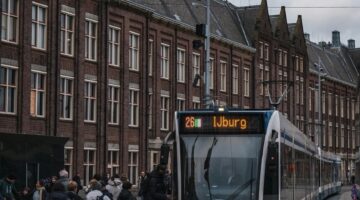
The neighborhood is strategically located along tram and bus routes heading toward Central Station, Zuid, and West. Trams 17 and 7 run along the main streets every 5–8 minutes during rush hour. Bus 15 provides a direct connection to Amstel Station. You can reach the city center by bike in 15 minutes. Parking requires a permit (€186 per year for residents), with waiting lists of 2–4 years for on-street parking.
Amsterdam School Architecture
Many homes in De Baarsjes were built in the Amsterdam School style (1910–1930), an architectural movement influenced by architect H.P. Berlage. Characteristic features include expressive brick facades with decorative elements, asymmetrical window arrangements, and elegant details around entrances. This architectural style gives the neighborhood a distinctive character that appeals to lovers of historic architecture.
Characteristics of Amsterdam School homes:
- Brick with decorative masonry
- Windows in various shapes and sizes
- Natural stone accents around doors
- Dormer windows with organic shapes
- Common stairwells with tiled murals
Green Spaces and Recreation
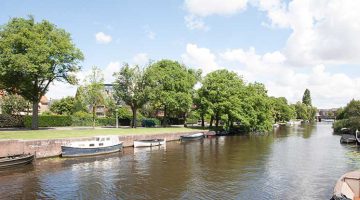
Rembrandtpark, located on the western edge of the neighborhood, offers 45 hectares of green space with playgrounds, sports fields, and an open-air theater (May–September). Erasmuspark also has play facilities and is heavily used by families. The proximity to Vondelpark (a 5-minute walk) makes the neighborhood even more attractive. Along the Admiralengracht are terraces where residents gather on summer evenings.
Amenities and Shops
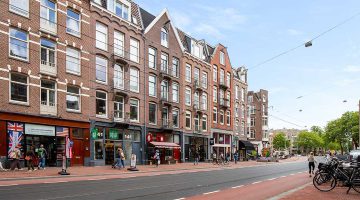
You can do your daily grocery shopping at the Ten Katemarkt (Wednesdays and Saturdays) or at the supermarkets on Bilderdijkstraat. De Hallen on Hannie Dankbaarpassage combines food halls, a movie theater, and cultural programming. Clercqstraat forms the commercial backbone of the neighborhood, with Surinamese bakeries next to specialty coffee bars and Turkish supermarkets next to vintage clothing stores.
Pros and Cons at a Glance
Advantages:
- Affordable alternative to downtown (€1,000–2,000 per square meter difference)
- Excellent public transportation connections (3 tram lines, 2 bus lines)
- Authentic Amsterdam School architecture
- Various restaurants and specialty shops
- Close to Vondelpark and other green spaces
- Active community with neighborhood associations
Disadvantages:
- High parking demand and long waiting lists for permits
- Noise pollution from through roads (Overtoom, Bilderdijkstraat)
- Systematic overbidding (84.8% of transactions)
- Limited-size homes (average 70.9 m²)
- Maintenance costs for pre-war buildings can be high
Home-buying guidance in De Baarsjes
The Amsterdam housing market demands local knowledge and quick action. A buyer’s agent who knows the neighborhood can help you develop realistic bidding strategies and identify hidden defects in pre-war buildings. With an overbid rate of 84.8% and complex structural issues, professional guidance is not a luxury.
FAQ: Frequently Asked Questions About De Baarsjes
Is De Baarsjes a safe neighborhood to live in? Yes, De Baarsjes scores above average for safety in Amsterdam. The neighborhood has active community associations and plenty of street lighting.
How much should I factor in for a bid premium? On average, a 10.4% bid premium, but this varies by property type. Turnkey homes typically see a 12–15% bid premium.
Can I park right outside? Street parking requires a resident permit, which has a 2–4 year waiting list. Garage spaces cost €150–200 per month.
Which supermarkets are nearby? Albert Heijn, Jumbo, and Dirk on Bilderdijkstraat. Plus specialty shops on Ten Katemarkt.
How long does it take to sell a home? Well-maintained homes sell within 40 days. Homes in need of renovation can stay on the market for 60–90 days.
Are the homes energy-efficient? Many properties have an energy efficiency rating of D or E. Renovations can improve this to B or A. Heat pumps are difficult to install in pre-war buildings.
What restaurants are nearby? There are various restaurants along Clercqstraat and Admiralengracht, ranging from Surinamese cuisine to specialty coffee and natural wine.
Is the neighborhood family-friendly? Yes, with several elementary schools, playgrounds in Erasmuspark and Rembrandtpark, and quiet residential streets.
How much does a fully renovated home cost? On average, renovation costs €3,000 per square meter. Renovating a 70-square-meter home requires an investment of €210,000.
Are prices still rising? Price growth is currently stabilizing. New construction around Sloterdijk offers alternatives that are easing the pressure.